

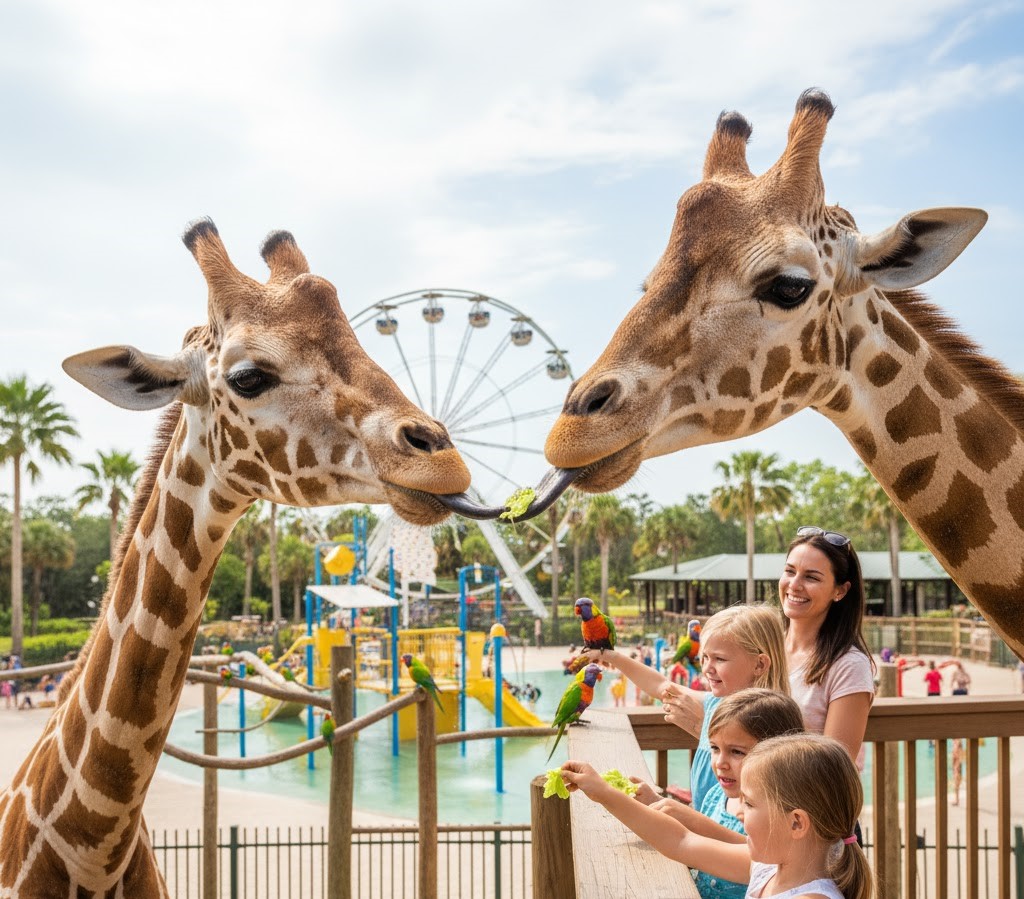
is a unique and long-standing wildlife attraction in Loxahatchee, Florida (near West Palm Beach), famous for being the first "cageless zoo" in the United States, opening in 1967. It offers a memorable experience through two main areas: a large drive-through safari and an adjacent walk-through amusement park. Here is a detailed breakdown of the park: Part 1: The Drive-Through Safari The main attraction is the 4-mile, 600-acre preserve where visitors drive their own vehicles slowly through seven distinct, themed habitats designed to mimic various African landscapes. The Safari Experience: Themed Habitats: The preserve is divided into sections named after famous African parks and regions, such as the Kalahari Bushveldt, Ruaha National Park, Gorongosa Reserve, and Serengeti Plains. Animals Roam Freely: Many non-predatory animals, including large herds of herbivores, are allowed to roam freely across the massive acreage, often walking right up to or across the road in front of vehicles. Common Sightings: You can expect to see some of the largest herds of Giraffes, Zebras, Southern White Rhinoceroses, Wildebeest, Impalas, Waterbucks, and various antelope species. Predator Viewing: Iconic predators, most notably the African Lions, are contained in their own securely fenced areas (like the Gorongosa Reserve section) for the safety of both the animals and the public. Chimpanzee Islands: A unique feature is the chimpanzee exhibit, where the animals live in complex social groups on a system of islands, replicating their nomadic lifestyle and providing an enriching environment. Rules and Safety: Visitors must remain in their vehicles at all times, keep windows and doors closed, and follow a slow pace. A recorded narration (often available via streaming or CD) guides visitors through the route and provides educational information about the animals. Best Time to Visit: Animals tend to be more active in cooler weather, such as early mornings, rainy days, or during the winter months. Part 2: Safari World (The Walk-Through Park) After completing the drive-through portion, visitors can park their vehicles and enter the Safari World area, which is a traditional walk-through park offering additional exhibits, rides, and family activities. Safari World Attractions: Animal Encounters: This area features smaller, traditional exhibits and highly popular interactive experiences: Giraffe Feeding: A major highlight where guests can stand on a platform to hand-feed the tall animals. Lory Bird Aviary: An opportunity to feed and interact with colorful lory parrots. Petting Zoo and other small exhibits. Rides and Amusements: Admission typically includes unlimited access to several family-friendly rides and attractions: Water Play: The Safari Splash Sprayground is a popular spot to cool off, featuring slides and various water play elements. Amusement Rides: Includes a Ferris wheel, the Rio Grand Train ride, a carousel, a Flying Elephant Ride, and mini-golf. Boat Rides: Paddle boats and a pontoon boat ride are often available. Dining and Shopping: The park has a main restaurant, snack shops, and gift shops for souvenirs. Conservation and Mission Lion Country Safari is an accredited member of the Association of Zoos and Aquariums (AZA) and is dedicated to wildlife conservation and education. The park plays an active role in breeding programs for rare and endangered species, such as the Southern White Rhinoceros, of which they have one of the largest herds in the country. The focus is on providing large, natural habitats for the animals to roam, promoting their well-being and natural behaviors.

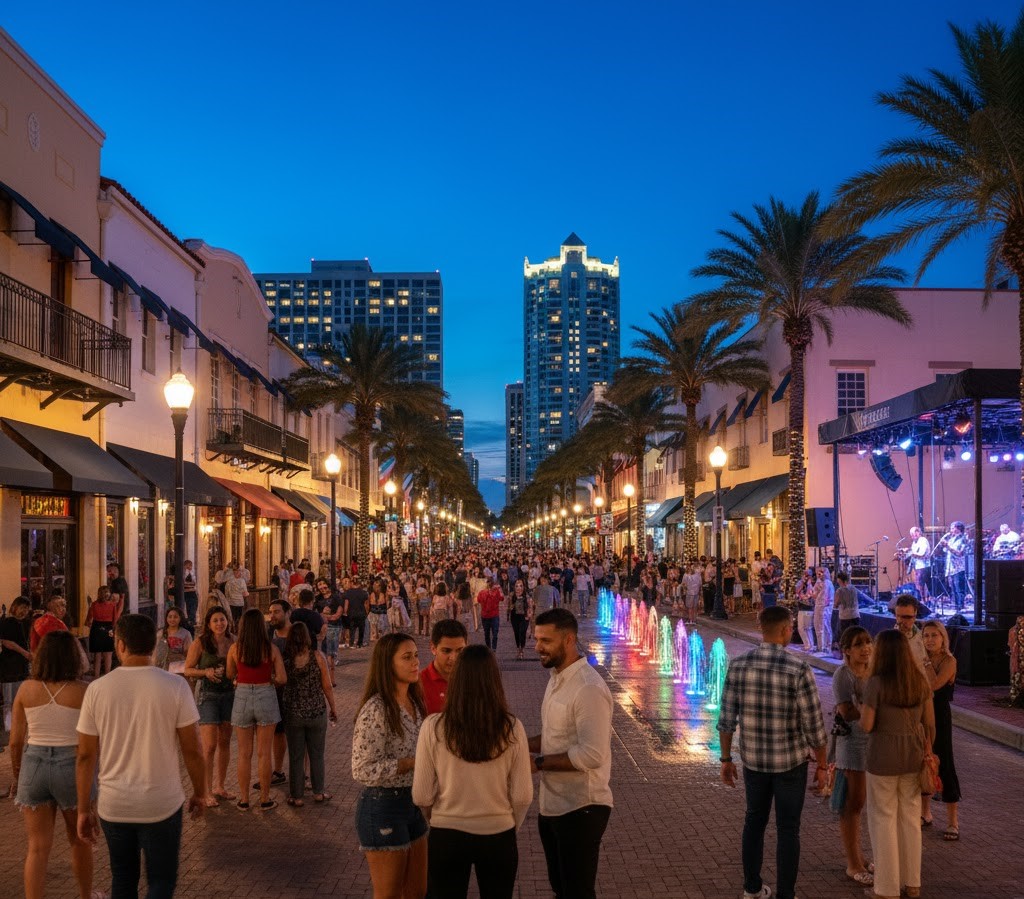
Clematis Street is the historical "Main Street" of West Palm Beach, stretching for several blocks from Flagler Drive on the Intracoastal Waterway westward into the downtown area. It is characterized by its blend of historic architecture, eclectic local businesses, and a thriving nightlife scene.Key Features and Vibe:Historical Significance: Clematis Street was the city's main commercial artery from the mid-1890s. The 500 block is a U.S. Historic Commercial District, featuring structures built in the 1910s and 1920s, showcasing Mediterranean Revival and masonry vernacular architectural styles.Waterfront Access (East End): The street terminates at the scenic Waterfront Commons on the Intracoastal Waterway. This area features:Centennial Park: A great public space with colorful, interactive water fountains for children.The Great Lawn: A venue for major festivals and events with picturesque views of Lake Worth Lagoon and Palm Beach across the water.Dining and Nightlife: Clematis Street is famous for its concentration of restaurants, bars, and nightclubs, giving it a high-energy, eclectic vibe, particularly after dark. Cuisines range from authentic Italian and Mexican to American gastropubs and unique local spots.Shopping: The retail mix tends to favor local boutiques, antique shops, novelty stores, and unique small businesses over large national chains.Signature Events:Clematis by Night: A highly popular, free weekly concert series held on Thursday evenings at the Waterfront, featuring live music.GreenMarket: An award-winning farmers' market held seasonally on Saturday mornings by the waterfront.4th on Flagler: The city's massive Independence Day fireworks celebration.2. The Square (Formerly CityPlace / Rosemary Square)Located a few blocks south and west of the main Clematis corridor, The Square is a large, upscale, mixed-use complex that spearheaded the urban renaissance of West Palm Beach in the early 2000s.Key Features and Vibe:Urban Design: Originally opened as CityPlace in 2000, it was later rebranded as Rosemary Square and is now simply The Square. It is a premier example of New Urbanist development, designed as a city-within-a-city.Architecture: The design is distinctly European-inspired, featuring Mediterranean and Venetian architectural elements, creating an elegant, polished, and open-air atmosphere with central plazas and beautifully paved pedestrian streets.Retail and Lifestyle: The focus is on a high-end, contemporary lifestyle. It hosts a mix of luxury and national retail tenants, home furnishings, and upscale dining. Major anchors often include a cinema, a fitness center, and a grocery store (Publix).Mixed-Use Development: Beyond shopping and dining, The Square incorporates residential units (apartments and condos) and modern office towers, fostering a truly vibrant 24/7 community.Cultural Centerpiece: The complex incorporates the beautifully restored Harriet Himmel Theater (a former 1926 church), which now serves as a cultural and event venue.Community Space: The central plaza and outdoor seating areas are designed for gathering, with programmed events, pop-up markets, and art installations (like the famous Wishing Tree or seasonal holiday displays).Connecting the DistrictsThe relationship between Clematis Street and The Square is symbiotic, with a free trolley service often connecting the two areas, making it easy for visitors to experience the full range of downtown offerings.FeatureClematis StreetThe SquareVibeHistoric, Edgy, Nightlife-focused, LocalUpscale, Polished, Contemporary, LifestyleFocusBars, live music, eclectic dining, waterfront eventsHigh-end shopping, designer stores, new-age dining, residential/officeArchitectureHistoric storefronts (Mediterranean Revival, etc.)Modern interpretation of Mediterranean/Venetian designKey AttractionWaterfront Commons, "Clematis by Night" concertsCentral plaza, Harriet Himmel Theater, luxury shopping